
In short: Since 2026, a company car older than 16 years falls under the youngtimer scheme; up to and including 2025, this was 15 years, and there is a transitional arrangement. The taxable benefit is then 35 percent of the market value instead of 22 percent of the list price, which is much cheaper at a low current market value. The 2027 Tax Plan proposes raising the limit to 17 years in 2027 and 20 years from 2028.
Youngtimer scheme: favorable tax addition for entrepreneurs
The youngtimer scheme is a popular tax scheme that allows you as an entrepreneur to save significantly on the taxable benefit of your company car . Especially if you do not need a new car, a youngtimer offers many financial advantages. In this article, we explain what a youngtimer is, how the scheme works, and what you should look out for.
What is a youngtimer?
For the purposes of the tax addition, since 2026 a youngtimer is defined as a car older than 16 years (up to and including 2025, this was 15 years). If you were already using the car in 2025 and it was older than 15 years on December 31, 2025, it will also fall under the scheme in 2026. This often involves a well-maintained car with some luxury features, such as a BMW, Mercedes-Benz, or Porsche. What does the youngtimer scheme entail? You pay a 35% tax addition on the market value (the current market value) of the car. Because the current market value is usually much lower than the list price, the tax addition is fiscally attractive. This allows you to drive comfortably and affordably.
Why is the youngtimer scheme fiscally attractive?
The biggest difference between a new car and a modern classic car is the additional tax liability. For a new car, the additional tax liability is calculated based on the list price, while for a modern classic car, it's calculated based on the current market value. Although the percentage is higher for modern classic cars (35%), the costs are often much lower due to the lower current market value.
Other costs such as maintenance, fuel, and parking are also deductible. This allows you to save significantly as an entrepreneur.
How is the additional benefit for youngtimers calculated?
For example: an Audi A6 Avant with a new price of €62.000.
- New Audi A6: 22% taxable benefit → net €563 per month (income tax bracket 49,50%)
- Youngtimer Audi A6 (17 years old, current market value € 6.000): 35% youngtimer tax addition → net €86,63 per month (income tax bracket 49,50%)
Savings: hundreds of euros per month thanks to the lower current market value.

Is there an electric youngtimer scheme?
There are currently few fully electric cars old enough to be considered youngtimers, but this will become more relevant in the coming years. If you drive an older company electric car, check the current rules regarding the taxable benefit with the Tax and Customs Administration or your advisor.
Advantages and disadvantages of the youngtimer scheme
Benefits:
- Lower additional tax than a new car
- Tax-attractive due to deductible costs
- Ideal for entrepreneurs who want comfort and luxury
Cons:
- Car is older, chance of higher maintenance costs
- Less environmentally friendly than new electric car

Future of the youngtimer scheme
The regulations are becoming stricter step by step. Since 2026, the age limit has been 16. In the 2027 Tax Plan, the Cabinet proposes raising the limit to 17 in 2027 and to 20 from 2028. That is another proposal: follow the decision-making process if you are considering a youngtimer.
How can you avoid company car tax?
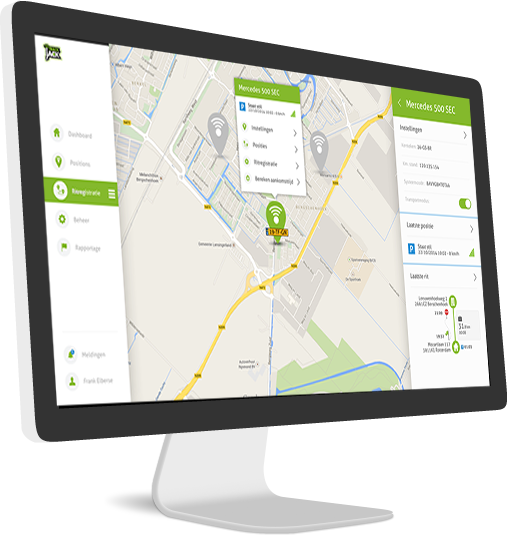
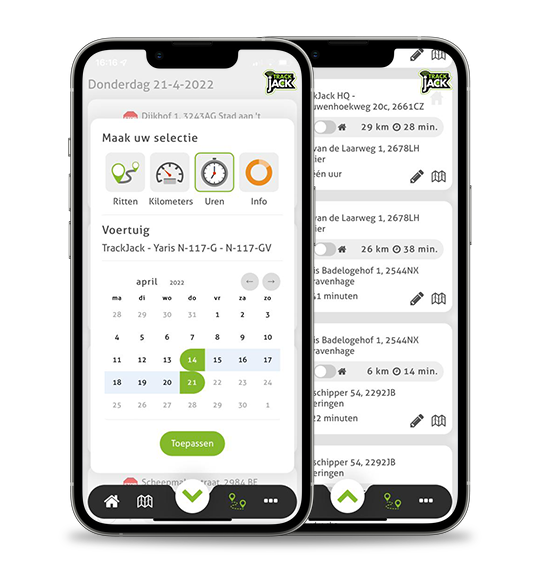
With a mileage tracking system, you can easily keep track of your journeys and demonstrate to the Tax Authorities that you have driven no more than 500 kilometers privately. Discover our mileage tracking system.
What is a youngtimer?
For the tax addition: since 2026, a car older than 16 years, with a transitional arrangement for cars you were already using in 2025 and that were older than 15 years on December 31, 2025.
How does the youngtimer scheme work?
The scheme means that you pay a 35% youngtimer tax addition on the current market value of the car instead of the list price.
How is the additional charge for a youngtimer calculated?
The taxable benefit is calculated by taking 35% of the market value (the current market value) of the car.
Can I avoid the additional tax for youngtimers?
Yes, by driving less than 500 km privately and demonstrating this with a journey registration system.
When does the youngtimer scheme end?
There is no end date, but the age limit is increasing: since 2026 it has been 16 years, and according to the proposal in the 2027 Tax Plan, it will be 17 years in 2027 and 20 years from 2028.
